What Did Jesus Mean When He Said, “Before Abraham Was, I AM”?
“Before Abraham was, I AM” is one of the strangest statements Jesus ever made—and one of the most significant.
Grammatically, it almost sounds wrong. Why didn’t Jesus simply say, “Before Abraham was born, I was”? The unusual wording becomes much more significant when we compare it with another strange statement made centuries earlier—when Moses asked God His name at the burning bush.
And perhaps the best indication that Jesus’ words meant far more than simply claiming to be older than Abraham is what happened immediately afterward.
They picked up stones.
Jesus’ Strange Choice of Words
The conversation begins with Jesus speaking about Abraham:
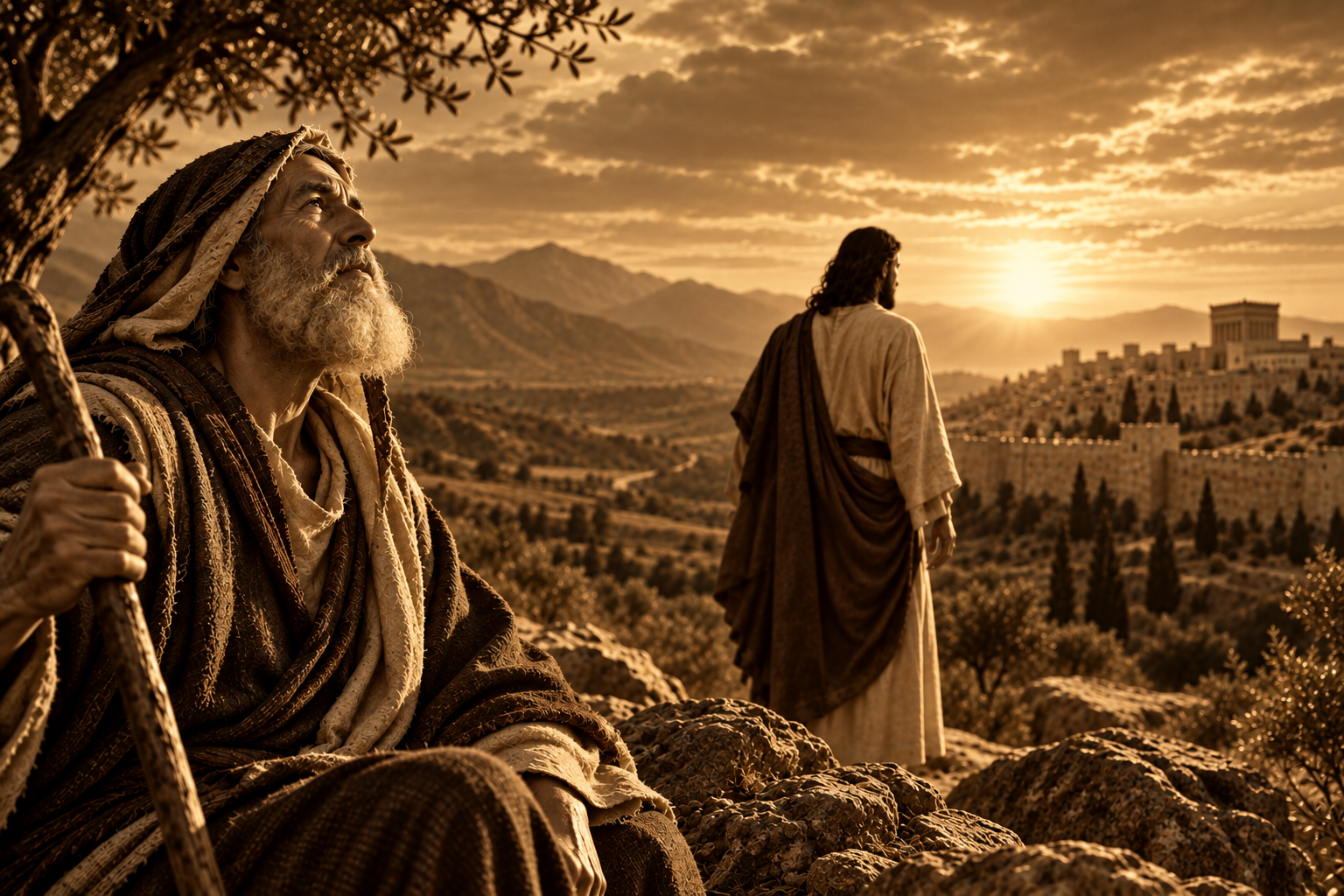
“Your father Abraham rejoiced to see My day, and he saw it and was glad.” So the Jews said to Him, “You are not yet fifty years old, and have You seen Abraham?” Jesus said to them, “Truly, truly, I say to you, before Abraham was born, I AM.” — John 8:56–58
For context, we need to go back to Exodus 3:14. Moses asks God whom he should say sent him to the Israelites, and God replies:
“I AM WHO I AM”; and He said, “Thus you shall say to the sons of Israel, ‘I AM has sent me to you.’” — Exodus 3:14
This is the name from which comes the Hebrew YHWH—often pronounced Yahweh—and from which the name Jehovah was later derived. This was the name associated with the covenant God of Israel. It was regarded as so holy that the Jews would not even speak it.
And yet here, Jesus claims it for Himself.
What Did Jesus Mean by “Before Abraham Was, I AM”?
If Jesus were merely claiming to be older than Abraham, we would expect Him to say something like, “Before Abraham was born, I was,” or perhaps, “I existed before Abraham.”
But He didn’t.
Instead, Jesus used the striking words “I AM.” The wording is peculiar enough to demand attention. Jesus was not simply making a claim about His age or preexistence. He was using language that pointed His listeners back to the name God used for Himself when speaking to Moses.
The Audience Understood the Claim
We only have to look at the reaction of those listening to understand the significance of Jesus’ statement:
“Therefore they picked up stones to throw at Him, but Jesus hid Himself and went out of the temple.” — John 8:59
His words were not lost on His audience. They did not respond as though Jesus had simply made an unusual claim about having existed before Abraham. They reached for stones.
Whatever we may make of Jesus’ statement today, those who heard Him understood that He had said something far more provocative than, “I am older than Abraham.”
So, What Did Jesus Mean?
The significance of “before Abraham was, I AM” is not simply that Jesus claimed to exist before Abraham. It is the peculiar way He chose to make that claim.
He said, “Before Abraham was, I AM.”
Read alongside Exodus 3:14—and followed immediately by an attempt to stone Him—the wording is difficult to dismiss as accidental.
Whether someone accepts Jesus’ claim is ultimately another question. But before deciding whether to believe Him, we should first understand what He was claiming.
Under the Law of Moses, blasphemy—the profaning of God’s name—was a capital offense punishable by stoning (Leviticus 24:16). So the reaction of Jesus’ audience matters. They were not merely offended by something He said. They understood His words as a claim so serious that, in their minds, it warranted the prescribed punishment for blasphemy.
That does not, by itself, prove that Jesus is God. People can misunderstand what they hear. But when His words are placed beside God’s declaration to Moses—“I AM WHO I AM”—the reaction becomes difficult to ignore.
Jesus did not say, “Before Abraham was, I was.”
He said, “Before Abraham was, I AM.”
The men standing before Him understood the significance of those words. They understood He was claiming for Himself the name the Jews felt was so holy it was not to be spoken. That He was claiming Himself to be YHWH! This was more than blasphemy. We don’t even have a word for how megablasphorious this was? (You like that one?) That is… only if He was wrong. Because the Jewish leaders could not see the true identity of the Man before them, they believed He was.
That is why they reached for stones.
Adapted from Logikos: A Comprehensive Reference to Biblical Evidence of the Trinity and the Deity of Christ, by Douglas K. Jeffrey.