The New Mishnah: When Christian Traditions Replace Grace
Matthew 15:3 — And He answered and said to them, “Why do you yourselves transgress the commandment of God for the sake of your tradition?”
Matthew 15:6 — “And by this you invalidated the word of God for the sake of your tradition.”
What exactly is happening about which Jesus is being so particular? And is He giving us some insight into Christian traditions or only speaking out against an archaic system? Let me get into a little history for a moment before bringing us all back to humility by describing how we are still guilty of doing this same thing today. Fair enough?
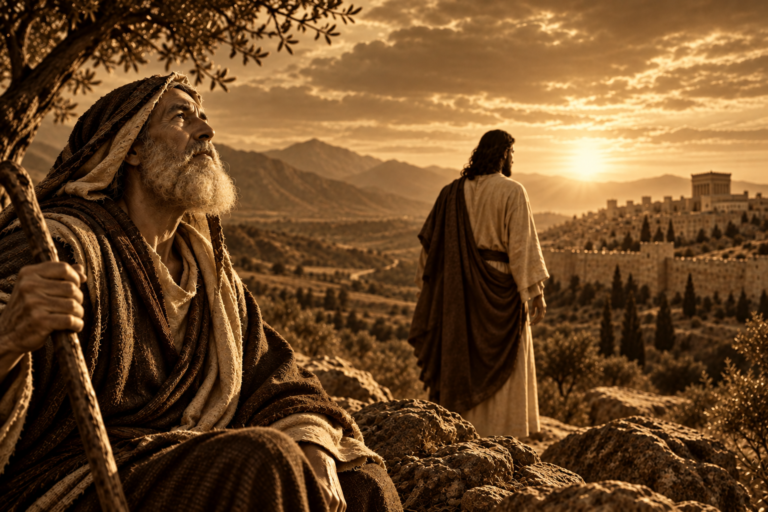
Many, many years ago in a land far, far away, God gave unto Moses what has traditionally been numbered as 613 laws contained in the first five books of the Bible. Not to be too presumptuous, but one of the purposes, so says the New Testament, of giving all of these laws was to be a tutor which would lead us to Christ (Galatians 3:24).
In other words, the Law is so extensive and our human nature is so flawed, our inability to successfully complete such a monumental task as perfectly observing all the Law was to bring us to utter dependence on Christ; i.e., faith. The Law was to lead us to repentance and dependence on the grace of God and His strength to perfectly fulfill this Law on our behalf.
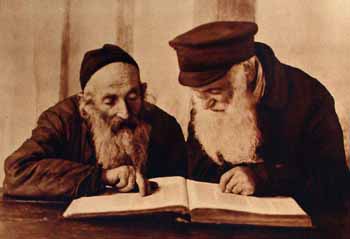
Enter the problem. Christian traditions are hardly a new phenomenon. Over time, a body of oral traditions developed around the written Law—interpretations, applications, and safeguards intended to define more precisely what obedience to the Law should look like. By Jesus’ day, many of these traditions had acquired enormous religious authority, particularly among the Pharisees. They were known as “the tradition of the elders.” Centuries later, many such rabbinic traditions would be collected and preserved in writings such as the Mishnah.
Estimates vary depending on how individual rulings and provisions are counted, but some estimates place the number of regulations preserved in the Mishnah at as high as 4,200. The Mishnah itself would not be compiled in written form until generations after Christ, but it preserved and developed the much older body of oral tradition that the New Testament refers to as “the tradition of the elders.”
In effect, 613 commandments apparently weren’t enough. If the Law drew a boundary, human tradition could build another fence around the boundary—and perhaps another fence around that one. Many of these traditions were not inherently bad. Some arose from a sincere desire to honor God, protect His Law, and preserve ritual purity. The problem was that God hadn’t commanded them.
And once human tradition begins to carry the authority of divine command, something dangerous happens. What began as an aid to obedience can become a measuring stick for righteousness. Eventually people can become so accustomed to the measuring stick that they lose sight of which commands came from God and which came from men. That is precisely the distinction Jesus exposes in Matthew 15: “Why do you yourselves transgress the commandment of God for the sake of your tradition?”
That accounts for why Jesus, in this exchange, snapped at the Pharisees, quoting Isaiah and exclaiming, “But in vain do they worship Me, teaching as doctrines the precepts of men” (Matthew 15:9). They did not see through to the heart of the message contained within the Law and so thought they were adhering to it when, in fact, they were failing in most every respect.
One of these traditions of the elders detailed specific procedures for washing before eating. This is not to speak poorly of our Purell generation, but quite frankly, Jesus is letting them know that washing your hands before you eat is not going to somehow make you super righteous; sorry moms. And not washing your hands before you eat is not going to somehow disqualify you from church membership.
You would think that was pretty straightforward. However, because these traditions had become so ingrained within this society, they mistakenly rationalized that Jesus was breaking the Law of God. As a result, they pressed Him and wanted to tear down any clout Jesus may have been building among the Jewish cohort of disciples. Primarily because Jesus didn’t do things the way they did things. Jesus made them feel uncomfortable because His devotion did not look or feel like theirs did. His ways were not their ways. And furthermore, He was not educated or formally trained, so how would He know anyway?!
Not moved by the Pharisees or their interpretation of piety, Jesus repeatedly brings the focus back to what they had missed. They could not perfectly keep the thousands of accumulated traditions. They could not perfectly keep the 613 commandments traditionally identified in the Torah. They couldn’t even perfectly keep the great Ten. So Jesus simplifies it even further for them by saying: love God and love your neighbor. He states this not in abolition of the others, but because the point of the others led to these more focused generalities. And yet their handling of the precepts of men kept them from even these two.
This is where we jump ship from the history lesson and start looking for practical application today. I am sure it is quite easy to look at those Pharisees and scribes and think, “They were so silly and misguided. How could they miss something so obvious?” But do you realize that in saying this you have become one of them? Here is the deal: we do the same thing all the time and do so MOSTLY within the church! Not sure what I mean? Let’s think about it for a second.
Christian Traditions in the Modern Church
How many Christians do you know that in haughtiness state they will never see an R-rated movie because they want to be sure to keep anything impure from before their eyes? Noble on the surface, yet are not The Passion of the Christ and Hacksaw Ridge two of the most spiritually exhilarating movies ever made? Mishnah.
How many Christians do you know that say they don’t listen to anything but praise and worship music? Disciplined on the surface, yet do Jonny Lang and Lifehouse not sing some of the most powerful worship music available even though in the secular market? Mishnah.
Don’t invalidate the word of God for the sake of your tradition.
Greater still, should a good Christian condemn another Christian for missing church? What if that condemned sinner was absent because he recently discovered his mother had cancer and couldn’t face people that day? Mishnah.
When a teen girl becomes pregnant due to making a poorly thought-through decision, should a good Christian be sure she understands that she needs to be repentant for her sins? What if she is self-condemning enough and really just needs a friend? Is it not more important that among the children of God she recognizes that she is special and truly loved? Mishnah.
Don’t invalidate the word of God for the sake of your tradition.
What if a pastor does not deliver an altar call at the end of every service? What if there is not a particular Scripture reading at your men’s Bible study and instead you just fellowship? What if your most devoted prayers are spoken with your eyes open and while driving your car instead of kneeling in your prayer closet?
What if your unbelieving neighbor asks you to come over for a beer because he has some life questions to ask you? What if you have to mow your yard on Sunday to avoid an HOA fine that could inhibit your ability to get groceries for your kids this week? On and on and on.
Don’t invalidate the word of God for the sake of your tradition.
God’s word is succinct. He doesn’t beat around the bush and makes His commandments straightforward. But there is always a reason that He says the things He says. And the reason always defaults to one thing: He loves you. Or better said, He loves His children.
Do you first and foremost respond to situations with this in mind? Or do you first and foremost respond based on what you have interpreted from a passage of Scripture that may or may not be speaking into the context with which you are currently presented?
Do not get wrong what I am trying to say. Should the Sabbath be observed? Of course. Is it good to protect your eyes from viewing unclean things? Beyond the shadow of a doubt. Should a pregnant teen be aware of God’s will for her life? You bet she should.
But do we default to condemnation and judgment only, or do we love? Jesus says in Matthew 11:30 that His burden is light. The church and its people should not then be going around and adding burden in response, but rather directing people to Him (by rebuke if necessary) to let Him take the burden for Himself. All of which must first be centered in love.
Have a beer with your neighbor and talk to him about why you love the Lord. Hug the neck of the pregnant teen and tell her that you will always be available to her if she needs to talk. Mow your yard and feed the little blessings that God has put under your care. Watch Hacksaw Ridge and take the whole family. Listen to Jonny Lang’s “That Great Day” even if you have to go to the House of Blues to hear it.
Matthew 22:38 “This is the great and foremost commandment.” Throw down the Mishnah in your heart and love the Lord and His people.
Extend a little grace on the front end and see what happens to the sin in the quiet shadows. Rebuke when a softer approach does not restore. But the goal is restoration in love, not in pious measuring sticks. There is certainly a time for judgment, but the Holy Spirit does a pretty good job of conviction on His timing and in His great ways—not mine.